.jpg)
.jpg)
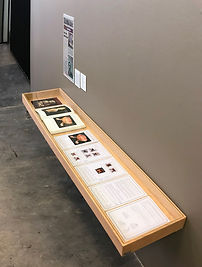
“(…) Aurora Noreña exposes an extensive research with documents and objects that narrates a case study on the loss of the country's pre-Hispanic heritage, pointing out the institutional and cultural problems that have made the trafficking of cultural goods a violation of the right to memory of the inhabitants of Mexico. Noreña is committed to the symbolic repatriation of the lost pieces, taking her investigation into the territory of the museological and creating a montage that allows the public reflects on the patrimonial problems of Mexico, beyond a notion of artisan goods.
Miranda, David. El animal Herido.


“Noreña explored with scale and built metal frames covered with fabric made from different colored plastic cords. These frames and fabrics are what give shape to this soft and taut sculptures. As is known, plastic cords are used in different traditional crafts and local designs, as the emblematic and well-known Acapulco Chair. The artist seems to place the appropriation of this type of national designs on a global scale in line with the issue of cultural and patrimonial pillage present in the Patterson case. Furthermore, the intention behind the recreation of these pre-Hispanic pieces through sculpture, is not to produce exact (scientific) replicas but to operate in a symbolic way. Their presence fills the gap for effective repatriation while giving visibility to the broad phenomenon of trafficking in pre-Hispanic objects outside the country”.
Garza Usabiaga, Daniel. Aurora Noreña: El que nace tepalcate
https://artishockrevista.com/2020/02/26/aurora-norena-el-que-nace-tepalcate/


